
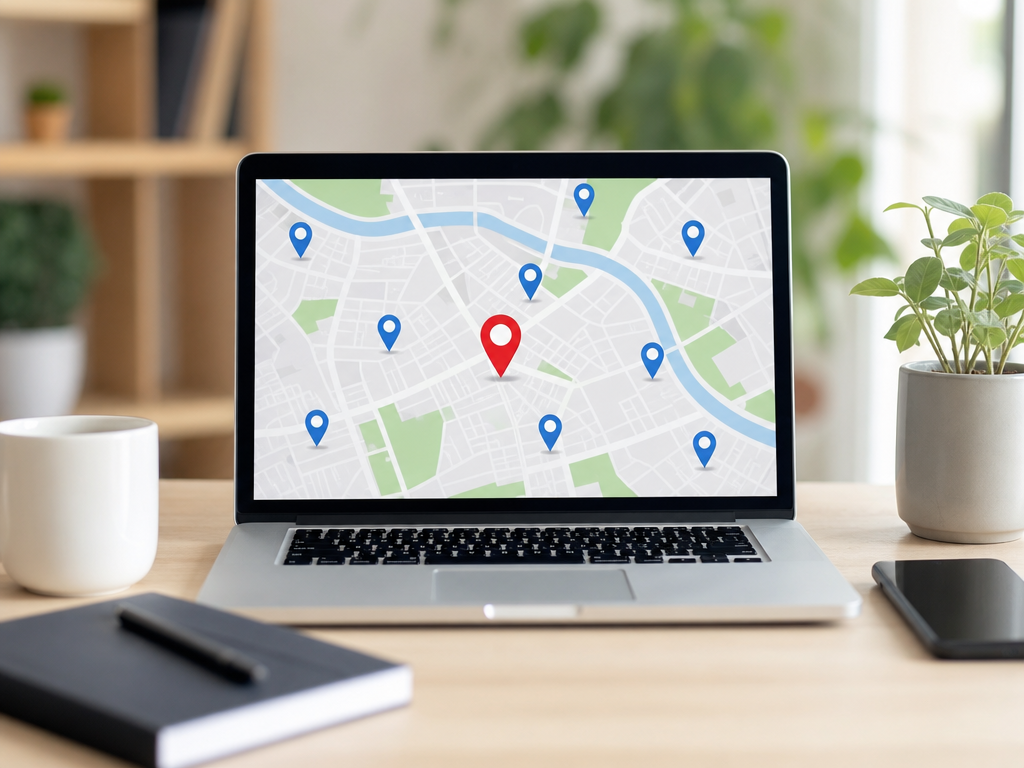
I’ve watched a lot of businesses open their doors over the years — restaurants, boutiques, accountants, contractors, art studios — and almost all of them make the same quiet mistake in their first month. They pour energy into the things they can see and touch: the signage, the website design, the product photos. Meanwhile, somewhere across town, a potential customer types their exact business category into Google, and nothing comes up. Or worse, something comes up — a blank shell of a listing with the wrong phone number and no hours — because a data aggregator already built a profile from stale public records, and nobody has claimed it yet.
This is the unglamorous reality of starting a business in the internet age. Your online presence doesn’t begin when you launch your website. It begins the moment your business is registered, sometimes even before that, in databases and directories that have been quietly cataloguing businesses for decades. Claiming those listings — asserting ownership, correcting the information, populating them with photos and hours and a real description — is one of the highest-return tasks a new business owner can do in their first thirty days. It’s not exciting. It doesn’t feel creative. But it works.
So let me walk through the ten directories I’d tell any new business to prioritize, in roughly the order I’d prioritize them, and explain the reasoning behind each choice rather than just handing you a checklist.
Start Where the Searches Actually Happen
The first stop is Google Business Profile, and it’s not even close. When someone searches for a business type near them, Google’s local results — the map pack, the sidebar card, the knowledge panel — are drawn almost entirely from this one source. Creating or claiming your Google Business Profile at business.google.com takes about twenty minutes if you have your information ready, and it immediately makes you eligible to appear in local search results, Google Maps, and the “People also search for” suggestions. The verification process usually involves a postcard mailed to your business address, which arrives in about a week. Don’t skip it. An unverified listing is visible but limited — you can’t fully edit it or respond to reviews.
Second is Apple Maps, which more people use than they realize simply because it’s the default map application on every iPhone and iPad. Apple’s market share in the U.S. hovers around 55 percent of smartphones, which means more than half of the people searching for directions to a new restaurant or boutique are doing it through Apple Maps. You claim your listing through Apple Business Connect, a platform Apple launched in 2023 to give businesses more direct control. The interface is clean and the process is straightforward.
Third, claim your Bing Places listing. Yes, Bing. I know the instinct is to dismiss it, but Bing powers search results for Microsoft Edge, for Cortana, and increasingly for AI-assisted search tools including Microsoft Copilot. It takes fifteen minutes and reaches a real slice of the population, particularly older users and corporate environments where Microsoft products are standard.
Fourth is Yelp. Its cultural reputation varies by industry — restaurants live and die by it, while plumbers care less — but Yelp reviews surface in a surprising number of places beyond the Yelp app itself, including Apple Maps results and various third-party aggregators. Claim the listing at biz.yelp.com, fill it completely, and upload at least five photos. A sparse Yelp page looks like an afterthought even if the business is excellent.
Fifth, create a Facebook Business Page. Even if you’re not planning to run Facebook ads or post daily content, the page serves as a directory listing. Millions of people use Facebook’s search to find local businesses, check hours, and read reviews. The page also functions as a social proof signal — a business with no Facebook presence can feel invisible to certain demographics.
Sixth is the Better Business Bureau. I’ve heard business owners dismiss the BBB as outdated, but it remains one of the first places consumers check when they’re vetting an unfamiliar company, particularly for service businesses — contractors, financial advisors, healthcare providers. A listing in the BBB directory, even without accreditation, signals legitimacy. Accreditation costs money; a basic listing does not.
Seventh is Foursquare. Here’s where I usually get skeptical looks. Foursquare the check-in app is largely a relic, but Foursquare the data company is something else entirely. Its location data feeds dozens of other platforms and apps — from Snapchat to various navigation tools to data analytics dashboards that businesses use to understand foot traffic. Claiming your Foursquare listing means your information propagates more accurately through that entire downstream network. Think of it as planting clean data at the source.
Eighth is the data aggregator Neustar Localeze, which you may never have heard of despite the fact that it quietly supplies business information to hundreds of directories, apps, and mapping services. Submitting accurate information to Localeze — and its counterpart aggregator, Data Axle — is like updating the master record. Errors in these databases can persist for years and show up in unexpected places. Both offer free basic listings, though paid plans accelerate distribution.
Ninth is your local Chamber of Commerce directory. This one is hyperlocal and often underestimated. Chamber directories are indexed by search engines, and they carry a geographic authority that national platforms don’t. A listing in the Hilton Head Island Chamber of Commerce directory, for instance, tells search algorithms something specific about where you operate and who you serve. Many chambers include a directory listing with membership, and membership itself carries networking value that purely digital platforms can’t replicate.
Tenth — and I’d argue this one is the most overlooked — is the U.S. Small Business Administration’s online presence resources, which point toward government-affiliated business directories and databases. Depending on your business type, registering in SAM.gov (the System for Award Management) or your state’s official business registry directory can open doors to government contracts and grant opportunities while also establishing a verified public record of your business’s existence.
Why Consistency Matters More Than Coverage
Here’s the thing that took me years to fully understand: the value of claiming listings isn’t just about being found in ten more places. It’s about consistency. Search engines build trust in a business by cross-referencing its name, address, and phone number — the NAP, in industry shorthand — across multiple sources. When your name is spelled slightly differently on Yelp than on Google, when your old address still appears on Foursquare, when your phone number changed six months ago and nobody updated the aggregators, the algorithm’s confidence in your business drops. That translates directly into lower local search rankings.
So before you claim anything, write down your canonical business name exactly as it should appear everywhere. Decide on your preferred phone number, your exact address format, your hours. Then go through each of these ten directories and enter that information identically. It sounds tedious because it is. But it’s the kind of tedious that compounds into real visibility over months and years, the kind that brings someone through your door who found you because everything lined up and the algorithm trusted what it saw.
New business owners often ask where to list their business first, as if there’s a single magic answer. There isn’t — but there is a right order, a right level of care, and a right understanding of why these platforms matter beneath the surface. Claim your listings like they’re a lease on digital real estate, because in a meaningful sense, they are.